Wine and cheese in France 1
The Bordeaux post ended up at an unreadable 1300 words so I have cut the more esoteric subjects and included them here instead. The summary is we love French wine and cheese.
Cheese: Our gastronomic experience at the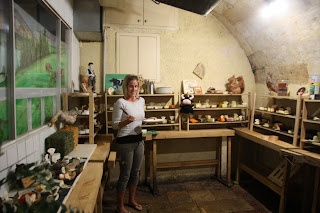 Bordeaux restaurant Baud et Millet.
Jerome, our host from the 2nd winery in Saint Emilion, was in fact the Maitre d’/ sommelier of our chosen restaurant for the last night in Bordeaux, Baud et Millet. With endless enthusiasm and whim, he led us through a night of wine and cheese, the likes of which we are likely never to experience again. After discovering we were Australia he proceeded to rummage through barrels of bottles to find an Australian wine. Not that we’d won’t to drink it, he knew we were here to Bordeaux. After a glass of free, slightly sweet white we decided on a bottle and started to decipher the menu. Following much confusion we discovered the options were, among others, an entree and a main or substitute your main for the cheese buffet, effectively an all you can eat, serve yourself cornucopia of over 250 cheeses. The choice was simple and after our blue cheese inspired entrees we headed down stairs to the cheese room. We took so long down there on our first trip, sampling the amazing variety on offer, that Jerome came down to make sure everything was alright!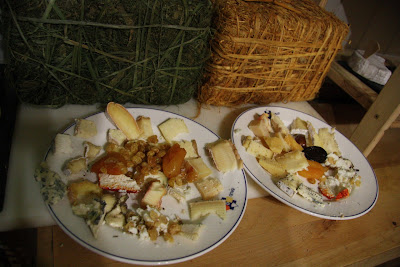 There was everything from soft and hard goats cheeses to the classic French Greuye to soft, washed rind, golden circles with bulging soft gooey centres. After 2 trips downstairs our belles could take no more so we finished the wine and rolled ourselves home. The quest for fine wine and cheese in France had succeeded on the 2nd day.
Wine: Ryan prattles on about wine classification schemes.
Unlike Australia where buying wine seems often to be pot luck, France (and increasingly Europe) has multiple classification schemes in order to help (and protect) the consumer. This seems like a good idea on the surface but dig deeper and it all becomes a little too unreliable and complicated, especially for us new world types who love there varietals.
To begin with each area has a different scheme and they are often based on different things. Then the scheme may have been revised recently or could still be original and thus has not been updated since 1855. Trying to find a cabernet sauvignon or a merlot is pointless as hardly any of the bottles will list what grape varieties were used to make the wine. In fact the classification schemes virtually forbid the top classes of wine from listing the varieties used. Consequently French wine becomes all about region or terrior. The rules ensure wine from a certain region will always be made the same way and thus taste similar (allowing for vintage differences due to climate during the year). T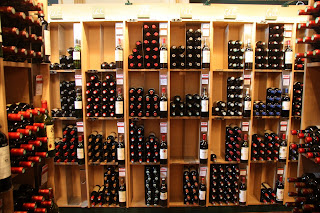 hat way the label means something as all Saint Emilion reds from a certain producer will taste similar. Thus the rules are somewhat like a dog chasing its tail, limiting the labelling then containing further rules to enable the labels to mean something. No doubt it has not been designed like this, rather, designed to ensure a name (be it region or winery) continues to mean something to consumers. But by ensuring reliability and decreasing variability it risks stifling innovation in winemaking, perhaps giving the new world an unfair advantage.
It all certainly made for much debate with winemakers throughout Bordeaux and Burgundy, many of them quick to condemn Australian winemaking techniques. Often it seemed there was a touch of jealousy, at the opportunities and techniques available to new world winemakers. While they are quick to say it is not a fair playing field, they certainly don’t seem to be struggling. All the winemaking in the world won‘t make an Australian wine French, and classification schemes or not “Made in France” will always count for something.
Cheese: Our gastronomic experience at the
 Bordeaux restaurant Baud et Millet.
Jerome, our host from the 2nd winery in Saint Emilion, was in fact the Maitre d’/ sommelier of our chosen restaurant for the last night in Bordeaux, Baud et Millet. With endless enthusiasm and whim, he led us through a night of wine and cheese, the likes of which we are likely never to experience again. After discovering we were Australia he proceeded to rummage through barrels of bottles to find an Australian wine. Not that we’d won’t to drink it, he knew we were here to Bordeaux. After a glass of free, slightly sweet white we decided on a bottle and started to decipher the menu. Following much confusion we discovered the options were, among others, an entree and a main or substitute your main for the cheese buffet, effectively an all you can eat, serve yourself cornucopia of over 250 cheeses. The choice was simple and after our blue cheese inspired entrees we headed down stairs to the cheese room. We took so long down there on our first trip, sampling the amazing variety on offer, that Jerome came down to make sure everything was alright!
 There was everything from soft and hard goats cheeses to the classic French Greuye to soft, washed rind, golden circles with bulging soft gooey centres. After 2 trips downstairs our belles could take no more so we finished the wine and rolled ourselves home. The quest for fine wine and cheese in France had succeeded on the 2nd day.
Wine: Ryan prattles on about wine classification schemes.
Unlike Australia where buying wine seems often to be pot luck, France (and increasingly Europe) has multiple classification schemes in order to help (and protect) the consumer. This seems like a good idea on the surface but dig deeper and it all becomes a little too unreliable and complicated, especially for us new world types who love there varietals.
To begin with each area has a different scheme and they are often based on different things. Then the scheme may have been revised recently or could still be original and thus has not been updated since 1855. Trying to find a cabernet sauvignon or a merlot is pointless as hardly any of the bottles will list what grape varieties were used to make the wine. In fact the classification schemes virtually forbid the top classes of wine from listing the varieties used. Consequently French wine becomes all about region or terrior. The rules ensure wine from a certain region will always be made the same way and thus taste similar (allowing for vintage differences due to climate during the year). T
 hat way the label means something as all Saint Emilion reds from a certain producer will taste similar. Thus the rules are somewhat like a dog chasing its tail, limiting the labelling then containing further rules to enable the labels to mean something. No doubt it has not been designed like this, rather, designed to ensure a name (be it region or winery) continues to mean something to consumers. But by ensuring reliability and decreasing variability it risks stifling innovation in winemaking, perhaps giving the new world an unfair advantage.
It all certainly made for much debate with winemakers throughout Bordeaux and Burgundy, many of them quick to condemn Australian winemaking techniques. Often it seemed there was a touch of jealousy, at the opportunities and techniques available to new world winemakers. While they are quick to say it is not a fair playing field, they certainly don’t seem to be struggling. All the winemaking in the world won‘t make an Australian wine French, and classification schemes or not “Made in France” will always count for something.
Comments